

NOTES FROM THE SECOND ROW
On the realities of the fashion industry, capitalist brainwash, marxist theory and (sort of) coming back to fashion week after a five-year hiatus.

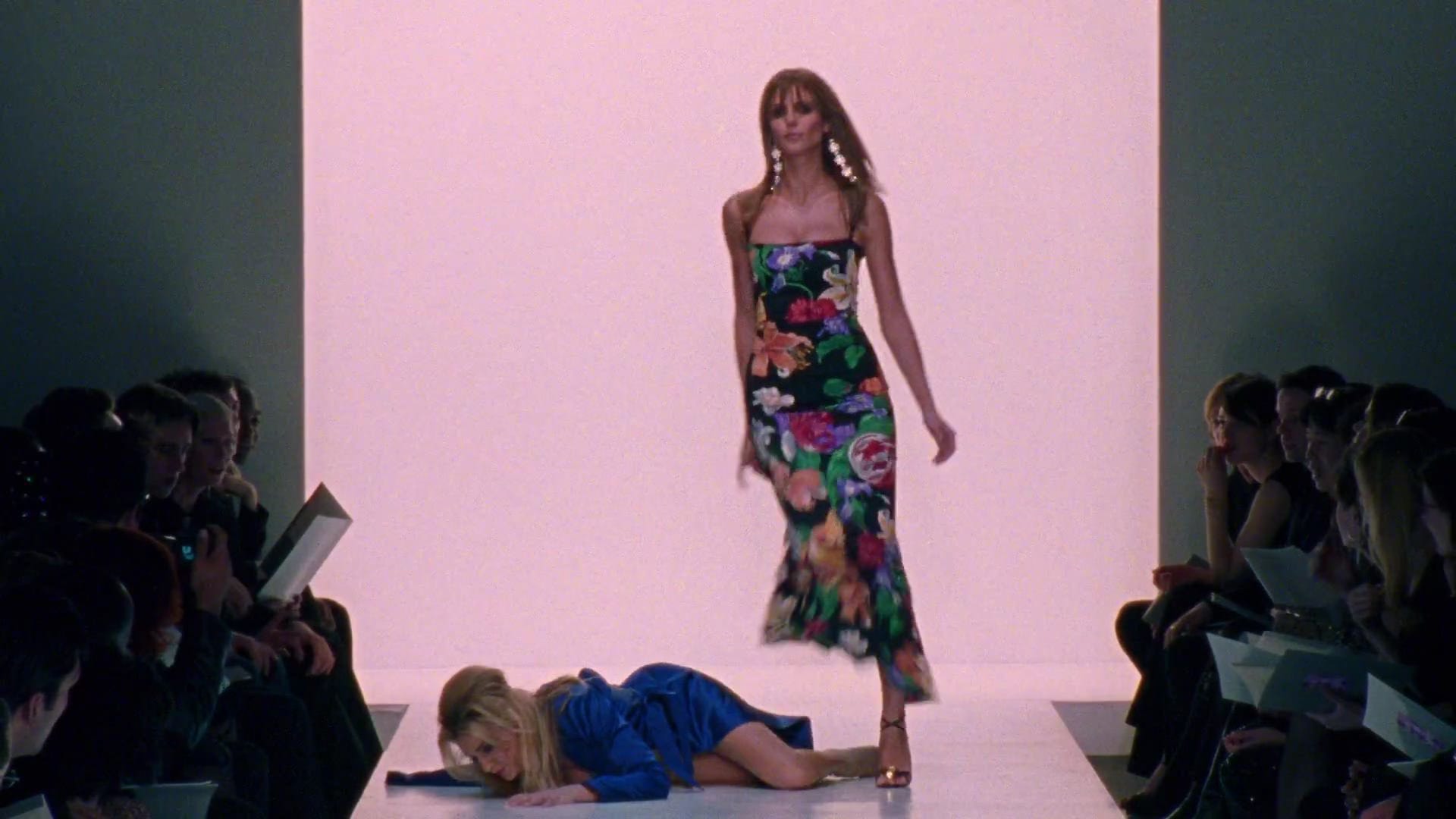
I hadn’t been to fashion week in a hot minute.
I used to be one of those people who covered everything, every fashion week. Back when, a lifetime ago, I worked full time for a now defunct French magazine, I did the whole thing: New York, London, Milan, Paris (plus Florence during menswear), four times a year. Think about it: that’s almost four months out of the whole year spent doing nothing but worrying about where you’re supposed to be in the next hour, and how to get there. It was a whirlwind. I thought I loved it.
For a long time, I was absolutely, 100% positive I would, like Tim Blanks, Suzy Menkes or Diane Pernet, want to be a fashion week fixture for the rest of my life. I craved the sense of urgency, the go go go energy, those first few seconds when a catwalk lights up and the music starts blasting. It took me actual years to realise that wasn’t love, it was just adrenaline addiction.
Oh, I took the bad with the good. The friends I made along the way, who are still today among my closest people, and everything I saw and learned made up, at least for a while, for the many, many anxieties that come with attending fashion week. You know the ones: why haven’t I been invited to this dinner? Was that PR angry at me? Why am I sitting second row while so-and-so who holds the same position as me is front row? Why does X person, who at dinner last evening spilled all of their secrets to me like we were BFFs, pretend not to know me this morning? Am I the ugliest, fattest, poorest, worst dressed person in this - and every - room? What does that say about my worth as a human being?
The first time I verbalised those questions to someone I thought was my friend, I was hit back with “That’s incredibly exaggerated. And it’s just you.” And I believed it for years, until someone else telling me “That’s the thing about fashion week. We all feel like the ugliest, fattest, poorest, worst dressed person in the room most of the time” woke me up from my gaslighting.
Then, one of my fashion week companions died in a freak accident, and, even if he was beloved by many of us in the industry, no one even grasped his death until the magazine he worked for noticed he wasn’t sending in the work he owed them. A week earlier, we had shared a long taxi ride and he had told me his plans for an upcoming creative project.
The cracks were beginning to show. I was starting to realise a lot of the people around me who claimed to be “middle class just like you” were anything but. That the members of the Parisian press elite who seemed to celebrate diversity - of race, culture, gender expression, nationality, class, aesthetic, you name it - were in fact systematically freezing out anyone who wasn’t exactly like them. That I was surrounded by deeply unhappy people with extensive Comme Des Garçons collections. That at the same hour of the same day of the same month of every year, I was doing the same show. I was living in groundhog day.
The last straw came during the final fashion week before the covid lockdowns, when a PR dinner I canceled due to having to write that night somehow gave rise to the rumor that I had caught covid and was “knowingly spreading the virus”, to the point that I had to swear in writing “I wasn’t infected” to the staff of the magazine I was covering for. I was done.
I’ve lived in fashion week-less bliss ever since. No FOMO, no threats to my already shaky mental health, no feeding my many insecurities. Who knew life could be so much more sort of ok-ish once you get out of high-school-popularity-contest mode.
Then, this season, I got invited to a bunch of events out of the blue. Cool shows with lovely PRs, so I decided to give them a go. And you know what? Fashion week is pretty much like riding a bicycle; your muscle memory will instinctively kick in once you’re back on the saddle, no matter how long it’s been since the last time.
But also, in this past five years, I’ve lived, learned and grown my understanding of marxist theory. Which is to say, I now can see the things my fragile ego and capitalist brainwashing used to prevent me from seeing. At the risk of sounding like some over-the-hill red, all those beautiful, uber cool people butterflying across events would be better off if all the energy they use in cultivating an attitude was spent towards a unionising effort.
After all - and even if a majority of young people in the industry have access to the bank of mum and dad -, about 85% of the persons attending - and participating in - most shows are not invited into the rooms where real decisions are made, and they lack any sort of financial security. All that’s left is expensive clothes, the rumour mill and a delulu aura.
Which means most of us in fashion are members of the lumpenproletariat, clad in sample sale Ottolinger and Balenciaga. I know, I know; as Roger Sterling would say, “hey Trotsky, you work in advertising”. I have no idea where I’m going with this, and I have no idea how to even start changing things in an industry that reminds me both of a pantagruelian black hole and of Goya’s Saturn Devouring His Son.
All I know is I was happy to get a glimpse of fashion week from a different perspective after all these years, and that I’m grateful to not have to cover every show nowadays, or else there’s no telling where my mental health would be. So I guess I’m still done with fashion week. I think Björk said it best back in 1993: there’s more to life than this.
I love the concept!
Hi Marta, what you say is what I feel sometimes when I cover París Fashion week. I’m very happy when I have an invitation for a show, but I feel that everything is a “mise en scène”. People, mostly influencers that I don’t know, have a very rude behaviour and they don’t really care about the show or the collection, and sometimes I feel that everything is fake, like Disneyland. Thank you for sharing your experience.